
Software that satisfies specified quality standards and performs as intended is guaranteed by the methodical process known as quality assurance, or QA. In order to identify and address problems early in the development process, it entails constant monitoring, testing, and evaluation. By promoting transparent cooperation and peer review, QA ensures dependability, stability, and security in the context of free software. Together, developers and users test, report bugs, and enhance functionality. Free software is kept effective, reliable, and in line with user and industry standards thanks to this open and community-driven methodology.
What Is Quality Assurance and How Does It Help to Deliver Bug-Free Software
AI Applications | Software Testing | Software Development Life Cycle
It is now imperative for success to release software free of bugs in the rapidly evolving digital world of today. Making sure every product satisfies the highest quality standards prior to launch is crucial as companies continue to invest in software development. Quality Assurance (QA) is essential in this situation. QA serves as the cornerstone of reliable software testing, guaranteeing that each application runs smoothly, correctly, and provides an outstanding user experience. The true meaning of quality assurance, its distinctions from quality control, its significance in the Software Development Life Cycle (SDLC), and how it interacts with contemporary technologies like artificial intelligence, machine learning (ML), to promote innovation and dependability will all be covered in this comprehensive guide.
Quality Assurance Defined: What It Is and Why It Matters
Quality Assurance (QA) is a systematic and strategic process that ensures software products and services meet predefined quality standards. QA at Dev Mondiale takes a proactive approach, concentrating on avoiding mistakes before they happen rather than just responding to them. Dev Mondiale’s Quality Assurance approach basically makes sure that all phases of the software development process, from planning to final deployment, adhere to established frameworks, methodologies, and industry best practices. This dedication aids in providing customers throughout the world with dependable, effective, and error-free software solutions.
Quality assurance’s main goals are to:
- Boost software performance and dependability.
- Increase user satisfaction in general.
- Minimize bug fixes and post-launch maintenance.
- Assure adherence to industry, security, and regulatory standards.
To guarantee that every product satisfies quality standards and provides an ideal user experience, they create test plans, examine requirements, and validate deliverables.
Role of Quality Assurance in the Software Development Life Cycle

Planning, analysis, design, development, testing, deployment, and maintenance are the phases that make up the Software Development Life Cycle (SDLC). Each of these stages incorporates Quality Assurance (QA) to maintain process uniformity, reduce risks, and promote ongoing development.
-
Analysis of Requirements and Planning
Understanding business objectives, user needs, and functional requirements is the first step in the QA process. To guarantee clarity and alignment with project goals, QA specialists set testing strategies, acceptance criteria, and key performance indicators (KPIs) early in the process.
-
Phase of Design
QA teams examine design specifications during the design phase to ensure technical soundness, usability, and logical accuracy. To identify possible problems before development starts, this may involve static testing techniques like design walkthroughs, documentation reviews, and code inspections.
-
Phase of Development
While QA experts conduct dynamic testing to verify code functionality in real time, developers follow established coding standards and best practices during this phase. This cooperation guarantees that any bugs or logical mistakes are found and fixed as soon as possible.
-
Phase of Testing
The QA process revolves around this. To ensure that all functional and non-functional requirements are satisfied, testers use a variety of testing methodologies, including black box, white box, and grey box testing. The goal is to ensure stability, performance, and a seamless user experience.
-
Installation and Upkeep
QA teams make sure the software is secure, optimized, and fully functional before it goes live. Continuous testing and monitoring after deployment aid in the early detection and resolution of any problems, preserving long-term dependability and performance.
Quality assurance and quality control serve as the cornerstone of dependable, user-centric software development by being involved in all stages of the SDLC.
Important Techniques for Quality Assurance

Several Quality Assurance (QA) techniques are used in modern software development to guarantee accuracy, functionality, and performance over the course of the project. The most popular methods are listed below:
Static Examination
Examining the requirements, design documents, and code without running the program is the main goal of static testing. It consists of:
- Code Evaluations
- Walkthroughs
- Examinations
Early validation saves time and money by identifying possible flaws before development moves forward.
Adaptive Testing
Dynamic testing, as opposed to static testing, entails executing the program and watching how it behaves in real time. It finds usability problems, performance snags, and functional errors to make sure the application runs as intended in a variety of scenarios.
Testing in Black Boxes
Without having access to the underlying code, testers assess the system’s inputs and outputs in black box testing. Verifying that the application responds appropriately to user interactions is the main goal.
Example: Verifying that a login form accurately validates passwords and usernames.
White Box Examination
White box testing offers a thorough examination of the internal logic, structure, and data flow of the application. In order to detect hidden flaws, testers check the source code for logic correctness, security, and full code coverage.
Grey Box Testing
Black box and white box approaches are combined in grey box testing. To find integration problems, security flaws, and performance gaps, testers employ a partial understanding of the system’s internal operations, resulting in a thorough and effective testing methodology.
When combined, these QA techniques provide a thorough framework that guarantees software is reliable, safe, and usable before deployment.
Agile Quality Assurance: A Contemporary Method
In today’s agile development environment, teams treat Quality Assurance (QA) as a continuous, essential process built into every sprint—not as the final phase of a project. Agile Quality Assurance places a strong emphasis on continuous testing, teamwork, and development to make sure that software develops in tandem with project objectives.
Among the fundamentals of Agile QA are:
- Testing and continuous integration are necessary for early defect detection.
- Frequent feedback loops involving users, testers, and developers.
- Regression testing was automated to preserve quality throughout iterations.
- QA and development teams work closely together to resolve issues more quickly.
Teams can produce high-quality software more quickly, adapt quickly to changing requirements, and maintain consistent product reliability throughout the development cycle by implementing Agile QA.
Key Responsibilities of Quality Assurance Tester
The protector of software quality, a quality assurance (QA) tester, makes sure that all applications run without a hitch before they are made available to end users. Finding and fixing problems that might affect security, performance, or usability is their primary objective.
Principal Duties of a QA Tester:
Creating intricate scenarios, scripts, and test cases.
- Carrying out automated and manual testing to confirm functionality.
- Locating, reporting, and monitoring errors or discrepancies.
- Working together with developers to confirm updates and enhancements.
- Throughout development, both static and dynamic testing should be done.
Agile environments encourage quicker feedback loops, better teamwork, and more effective software delivery because QA testers collaborate closely with developers in real time.
Quality Assurance Services in Software Development
In order to maintain high standards throughout the project lifecycle, organizations frequently rely on specialized Quality Assurance (QA) teams or external QA specialists in modern software development services. These services are essential to guarantee that each product is dependable, safe, and ready for use.
Typical comprehensive QA services consist of:
- Automated end-to-end testing for quicker and more precise validation.
- Continuous integration and deployment (CI/CD) streamlines the delivery process.
- Performance and security testing to find weaknesses and maximise effectiveness.
- User Acceptance Testing (UAT) verifies that the functionality aligns with business objectives.
- Testing for cross-platform compatibility to guarantee reliable performance across all platforms and settings.
Businesses can produce reliable, scalable, and high-performing software that satisfies user expectations and endures real-world difficulties by incorporating expert QA services.
Artificial Intelligence (AI) and Quality Assurance
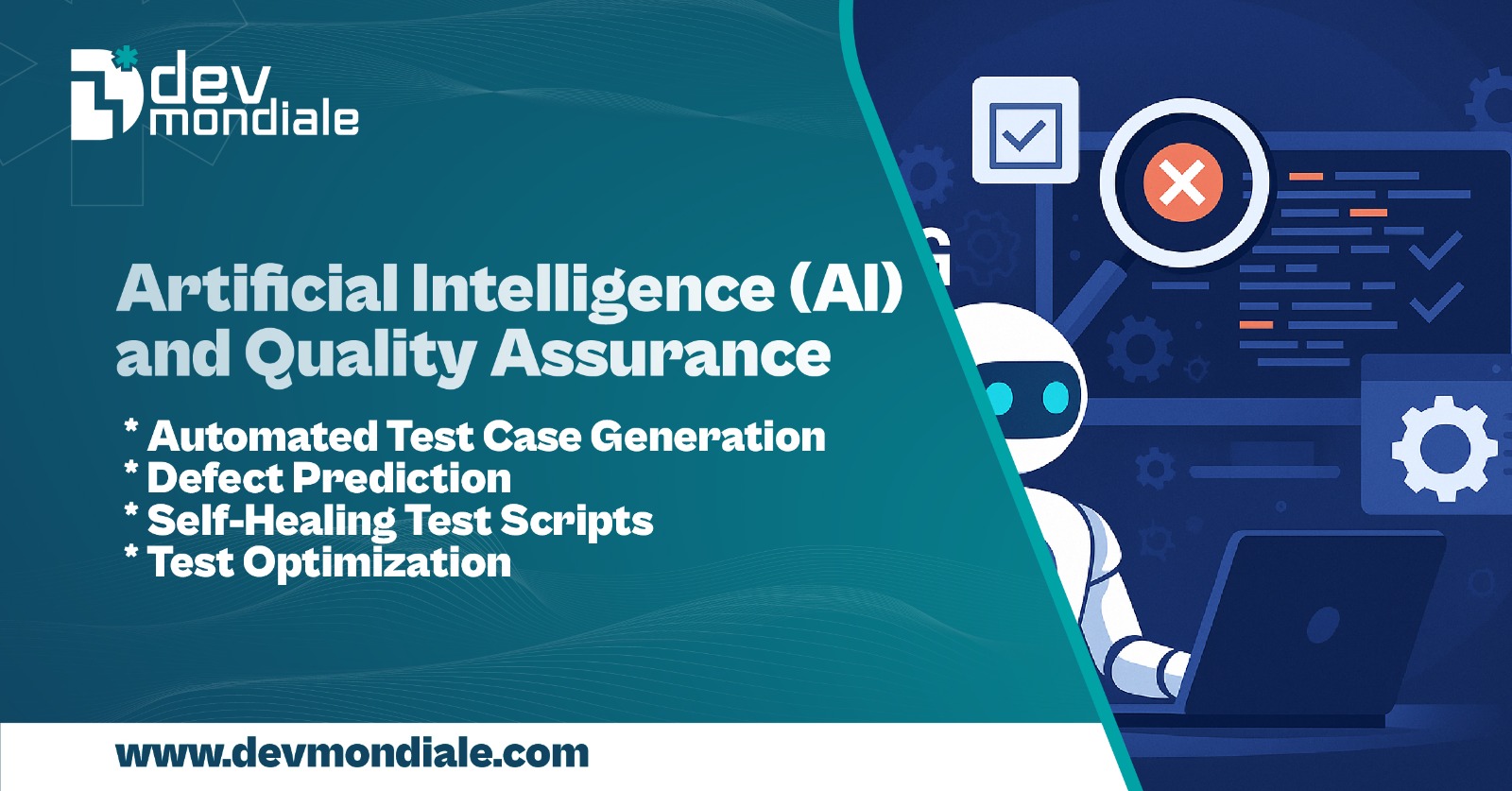
Artificial Intelligence (AI) and Machine Learning (ML) are revolutionizing the future of Quality Assurance consultants. With the help of these cutting-edge technologies, QA teams can process enormous volumes of test data, anticipate possible problems, and more accurately and efficiently automate repetitive testing tasks.
Important Uses of AI in Quality Assurance:
- Automated Test Case Generation: Using real user behaviour and project data from the past, AI-driven algorithms generate intelligent test cases.
- Defect Prediction: Machine learning models predict areas that are most likely to contain bugs by analysing code patterns.
- Self-Healing Test Scripts: AI-driven automation solutions do not require manual script updates because they can adjust dynamically to UI changes.
- Test Optimization: By identifying low-value or redundant cases and setting priorities for critical paths, AI improves test coverage.
Cybersecurity, Machine Learning, and Artificial Intelligence
Quality Assurance (QA) teams face new and complicated challenges as cybersecurity and artificial intelligence (AI)and cybersecurity continue to intersect. AI-powered systems require extensive testing to guarantee security, dependability, and fairness, even though they can detect threats and anomalies much more quickly than human analysts. For example, network monitoring, intrusion prevention, and anomaly detection all heavily rely on data science and artificial intelligence. However, a thorough comprehension of data pipelines, machine learning algorithms, and ethical considerations is necessary for validating these systems. To ensure that AI models not only produce accurate results but also function safely, openly, and responsibly in real-world settings, today’s QA consultants need to be experts in AI-driven testing frameworks.
Quality Assurance’s Significance in Software Development

It is impossible to overestimate the importance of Quality Assurance methods in software development since it affects every aspect of a product, from user satisfaction to company credibility.
Principal Advantages of Quality Assurance:
- Bug and error prevention: QA reduces rework later on by detecting and fixing flaws early in the Software Development Life Cycle (SDLC).
- Enhanced Security: QA helps protect apps from potential vulnerabilities by integrating AI and cybersecurity tools.
- Customer satisfaction: Trust and enduring brand loyalty are fostered by dependable, high-quality software.
- Cost-effectiveness: Early problem detection and resolution greatly reduce post-release maintenance expenses.
- Continuous Improvement: QA encourages methodical coding techniques and propels continuous process improvement.
Assurance of Quality in Remote and Agile Settings
QA has grown more adaptable and worldwide with the growth of remote teams and independent quality assurance specialists. Nowadays, a lot of companies employ independent QA specialists to manage temporary projects or specialized testing duties. Businesses can scale their QA procedures at a reasonable cost by using a freelance quality assurance professional. Freelancers and in-house teams can work together seamlessly to maintain high testing standards by using tools like Jira, TestRail, and Selenium.
Typical Obstacles in Quality Assurance
QA teams encounter several difficulties despite having robust procedures:
- Agile sprints have strict deadlines.
- Problems integrating third-party services.
- Limitations of automation tools.
- Insufficient communication between developers and QA.
- New testing abilities are needed for complex AI projects.
Organizations must make investments in automation, cooperation, and ongoing learning to overcome these.
AI, Automation, and Data-Driven Testing as the Future of Quality Assurance
The QA sector is changing quickly. The emphasis is moving from manual validation to predictive and autonomous testing as a result of developments in artificial intelligence, machine learning, and data science.
New Developments in Trends:
- AI-Powered Test Automation: To expedite testing, programs such as Testim, Applitools, and Mabl use machine learning.
- Predictive analytics: Before deploying code, AI predicts possible trouble spots.
- Continuous Testing: QA is integrated into CI/CD pipelines at every stage.
- AI-Based Security Testing: Real-time threat detection by fusing AI and cybersecurity.
QA specialists will soon work as data analysts and AI trainers, enhancing testing through astute insights.
Dev Mondiale: Using Artificial Intelligence to Create Smarter Software
At Dev Mondiale, we think that the clever combination of automation and innovation will shape technology in the future. We examine how AI is changing how companies create, test, and implement software in our most recent publication, Why ERP Software Is Essential for Business Growth in Saudi Arabia. About Us: Dev Mondiale is a progressive software development and digital innovation firm committed to building AI-powered, scalable solutions that enable companies to experience long-term success. We assist clients in utilizing technology to create more intelligent and effective digital ecosystems by emphasising quality, security, and innovation.
Conclusion
The basis for creating dependable, effective, and error-free software is quality assurance, or QA. QA guarantees that every product satisfies the highest standards of functionality and security by combining automated processes, continuous monitoring, and structured testing methods. Quality is our top priority at Dev Mondiale throughout the entire development process. Get in touch with us right now to find out how our QA specialists can assist you in producing faultless, intuitive software solutions. In addition to preventing errors, QA improves user satisfaction and fortifies the company’s credibility through proactive testing and continuous improvement.
FAQs
In software development, what is Quality Assurance (QA)?
A methodical procedure called quality assurance (QA) makes sure software satisfies predetermined standards for quality at every stage of development. Its main goals are defect prevention, increased dependability, and making sure the finished product performs as planned.
What are the main tasks in quality assurance?
Planning test strategies, creating test cases, running both automated and manual tests, examining code and documentation, and monitoring errors until they are fixed are all examples of QA activities.
Are software testing and quality assurance the same thing?
No. Software testing mainly concentrates on finding flaws in a developed product, whereas quality assurance is a more comprehensive process that aims to prevent defects.