
The agile methodology is a flexible and iterative approach to project management and software development that prioritises customer feedback, teamwork, and ongoing improvement. Agile divides projects into manageable chunks called sprints rather than following a set plan, which enables teams to react quickly to shifting needs. Transparency and quality are maintained throughout the process by regular meetings, assessments, and testing. Agile guarantees effective project execution and increased customer satisfaction by encouraging collaboration, adaptability, and quicker delivery.
What is Agile Methodology and How Does It Work to Deliver Better Results?
AI Tools | Agile Project Management | Software Development
To remain competitive in today’s rapidly evolving digital world, businesses require speed, flexibility, and adaptability. Agile methodology changes the game in this situation. Agile’s emphasis on cooperation, client satisfaction, and ongoing development has changed how teams plan, create, and deliver software, web, and mobile applications. Whether you are a software development company, a Saudi Arabian mobile app development company, or a UI/UX design specialist, implementing Agile methodology can significantly increase output, quality, and creativity. This article will explore the Agile methodology, its fundamental ideas, well-known frameworks such as Scrum and Kanban, and how it helps sectors like Python, Laravel, and AI development achieve better outcomes.
What is Agile Methodology?
Agile methodology is a flexible and iterative approach to software development and project management that places an emphasis on cooperation, adaptability, and ongoing development. Agile breaks down projects into smaller, more manageable cycles known as sprints rather than following a rigid, linear process. Teams are able to gather feedback, improve features, and modify goals in real time because each sprint produces a working product increment. Instead of strict planning, agile encourages cross-departmental collaboration, active customer involvement, and adaptability. Agile guarantees continuous advancement, creativity, and better results by substituting quick iterations for drawn-out development cycles.
The Core Principles of Agile Methodology
The Agile Manifesto, which was first presented in 2001, lists twelve guiding principles and four fundamental values that form the basis of Agile practices. These guidelines ensure that projects stay flexible, effective, and customer-focused across a range of domains, from software development and UI/UX design to app development and AI tool integration.
The Four Core Values of Agile
- People and their interactions with procedures and equipment
- Functional software, as opposed to thorough documentation
- Customer cooperation during contract negotiations
- Adapting to change rather than sticking to a plan
The Eleven Agile Principles
- Provide useful software on a regular and early basis.
- Accept requirements that change to satisfy client needs.
- Work together with stakeholders and customers every day
- Create initiatives centred on driven and capable people.
- For efficiency and clarity, communicate directly.
- Use functional software to gauge success.
- Keep the pace of development constant and sustainable.
- Prioritise technical prowess and careful UI/UX design.
- Make sure your solutions are straightforward and efficient.
- Encourage creative, self-organising teams.
- To enhance procedures and output, reflect frequently.
These fundamental beliefs and ideals support Agile teams in remaining adaptable, customer-focused, and committed to producing excellent, creative outcomes.
Agile Methodology in Software Development
Agile’s flexibility, iterative process, and emphasis on delivering value incrementally have made it the industry leader in software development services. Agile development teams work in brief, predetermined cycles called sprints to create usable software that can be evaluated, tested, and improved in real time based on user input.
Key Benefits of Agile in Software Development

- Quicker delivery of functional software
- Increased client satisfaction via ongoing cooperation
- Reduced project risk as every iteration is examined and enhanced
- Improved collaboration between testers, designers, and developers
Agile methodology offers a simplified and flexible framework that guarantees effectiveness, quality, and creativity throughout the software development process, from Laravel and Python development to AI-based solutions.
Agile and UI/UX Design
A key element of the Agile development process, UI/UX design makes sure that the user experience changes as the functionality of the product does. Agile incorporates design into every phase of the project, in contrast to traditional approaches that finish design before development. Throughout each sprint, designers collaborate closely with developers and stakeholders to improve interfaces and user experiences in response to shifting requirements.
In Agile, UI/UX Design Emphasises:
- Quick concept validation and prototyping
- Constant gathering of user input
- Improvements to iterative design
- Every sprint includes real-user testing.
However, agile helps companies to produce high-performing, engaging, user-centred, and intuitive products by coordinating design and development processes.
Agile Methodology in App Development
Agile methodology allows for greater flexibility, quicker delivery, and closer alignment with user needs in the field of app and mobile app development. A Saudi mobile app development company can use Agile to build feature-rich, scalable apps that match the tastes and needs of the regional market.
In Agile Mobile App Development, Teams Typically:
- Divide the application into more manageable, smaller features or modules.
- Organise brief sprints, usually lasting one to two weeks.
- Iteratively design, develop, test, and release updates
- Continue to gather user input and make quick adjustments.
Apps stay innovative, dependable, and user-focused thanks to this cyclical process, which also reduces development costs, speeds up time-to-market, and improves overall customer satisfaction.
Agile Software Development with Scrum
Scrum and Agile Software Development is a flexible framework that emphasises teamwork, adaptability, and client satisfaction. Breaking up the work into brief, manageable sprints enables teams to produce working software regularly. Scrum promotes openness, collaboration, and ongoing feedback, which speeds up change response. Productivity, quality, and alignment with changing project and business objectives are all enhanced by this method.
What is Scrum?
To improve cooperation, accountability, and transparency, Scrum breaks a project up into fixed-length sprints, typically lasting two to four weeks, and includes roles, rituals, and artefacts that are clearly defined.
Scrum Roles and Important Scrum Occurrences
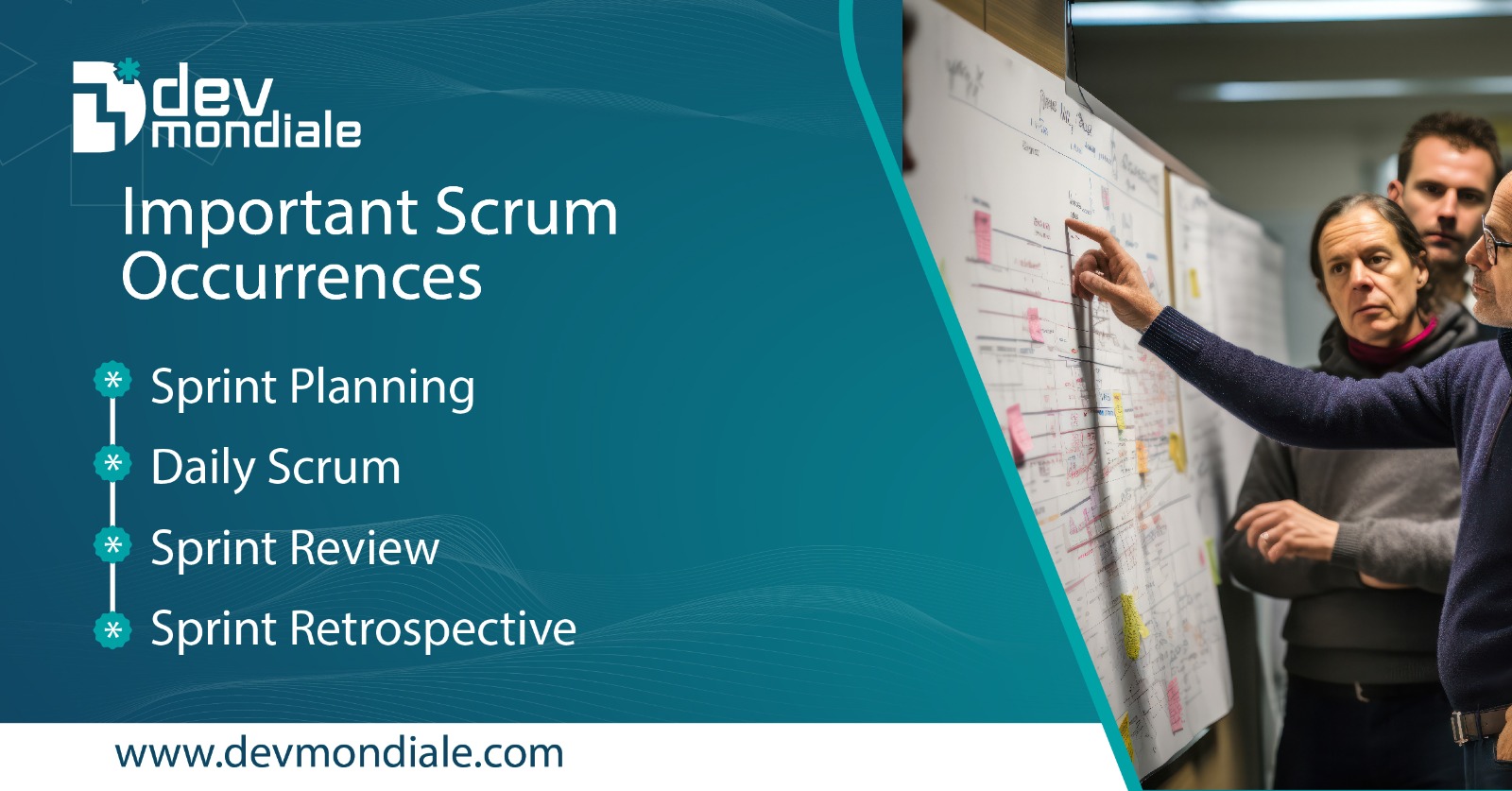
- Product Owner: Sets priorities and embodies the customer’s vision.
- Scrum Master: Leads the Scrum procedure and eliminates roadblocks
- Development team: creates, develops, tests, and delivers the final product.
- Sprint Planning: Establish objectives and assignments for the sprint
- Daily Scrum: stand-up meetings lasting 15 minutes to monitor progress
- Sprint Review: Show stakeholders the finished product.
- Sprint Retrospective: Assess performance and pinpoint areas for development
Scrum guarantees consistent progress, accountability, and improved team performance by placing a strong emphasis on defined roles, frequent communication, and ongoing reflection.
Kanban Methodology
Lean manufacturing gave rise to the popular Agile methodology known as Kanban, which places a strong emphasis on process efficiency and workflow visualisation.
The Operation of Kanban
- On a Kanban board, tasks are shown in columns labelled “To Do,” “In Progress,” and “Done.”
- Teams impose constraints on ongoing tasks to avoid overload and preserve concentration.
- Visual progress tracking makes it simple to spot and fix bottlenecks.
Kanban ensures seamless, effective, and transparent workflows and is particularly useful for software development, maintenance projects, or teams that prefer a continuous delivery model over fixed-length sprints.
Extreme Programming (XP)
The Agile methodology known as Extreme Programming (XP) is centred on enhancing software quality and accommodating customer demands. Dev Mondiale employs continuous testing, customer feedback, and technical excellence to implement XP, guaranteeing adaptable, superior software solutions that quickly and accurately meet changing business objectives.
Crucial XP Practices
- Pair programming is when two programmers collaborate to write and evaluate code.
- Writing tests before code to ensure functionality is known as test-driven development, or TDD.
- Continuous Integration: Testing and merging code frequently to identify problems early
- Regular Releases provide updates frequently to collect input and enhance
For Python, Laravel, and AI projects where flexibility, excellent code, and quick reaction to change are essential, XP works incredibly well.
Scaled Agile Framework (SAFe)
The Scaled Agile Framework (SAFe) offers a structured method for managing several teams across departments for big businesses implementing Agile. SAFe facilitates smooth collaboration at scale by fusing the principles of Agile, Lean, and DevOps.
Principal Advantages of SAFe
- Brings all teams together around a common goal.
- Enhances accountability and transparency throughout projects
- Facilitates efficient cross-team planning
- Keeps quality high even when working on large-scale projects
Businesses that provide enterprise clients with software development or mobile app development services can use SAFe to guarantee reliable, superior outcomes for intricate, multi-team projects.
What is Agile Project Management?
The use of agile project management techniques promotes adaptability, teamwork, and continuous delivery. Agile project managers prioritise flexibility and actively integrate stakeholder input over strict planning.
Crucial Elements of Agile Project Management
- Breaking down big projects into smaller, more manageable deliverables
- Setting priorities for features and tasks according to customer value
- Regularly reviewing sprints to monitor progress
- Plans that are dynamically modified as needs change
However, agile project management promotes quick innovation, guarantees effective workflows, and closely aligns deliverables with business goals in domains like software development, mobile app development, and AI projects.
Agile Quality Assurance (QA)
Agile emphasises continuous quality assurance, whereas traditional QA takes place at the conclusion of a project. Quality assurance ensures early defect detection by integrating testing throughout the development lifecycle.
In each sprint, QA engineers take part in the following tasks:
- Testing of units
- Testing for regression
- Automated testing
- Testing for user acceptance (UAT)
Teams can guarantee higher quality and quicker delivery by integrating QA into each sprint, particularly in AI and mobile app development projects where regular updates are required.
AI Tools in Agile Methodology Development
The way teams plan, develop, and test software has changed as a result of the incorporation of AI tools into Agile environments. In all phases of the Agile process, AI improves automation, prediction, and optimisation.
Agile Methodology frequently uses AI tools for the following purposes:
- Automated bug detection and code reviews
- Strategic sprint planning
- Project timeline prediction using analytics
- AI-powered suggestions for UI/UX design
- Chatbots for QA and customer feedback
Using AI tools in Agile can improve accuracy and shorten time-to-market for any digital agency, including Saudi Arabian mobile app development companies.
Agile Methodology in Laravel and Python Development
Because of their ease of use, scalability, and speed, the Laravel and Python frameworks are both frequently utilised in software development services. These technologies produce reliable and flexible solutions when paired with Agile.
- Agile Laravel development enables rapid iterations, feature testing, and modular development.
- Agile is advantageous for Python development because it allows for flexibility in prototyping and data integration for AI development.
Rapid delivery without sacrificing code quality or performance is guaranteed when Agile is used with these technologies.
Advantages of Agile Methodology

The many advantages of the agile methodology make it perfect for projects involving software, apps, and artificial intelligence.
Principal Benefits:
- Faster Time to Market: Timely releases are made possible by regular sprints.
- Improved Product Quality: Reliability is increased through ongoing testing.
- Improved Cooperation: To stay aligned, teams communicate every day.
- Adaptability: Agile can readily adapt to evolving needs.
- Customer-Centric Approach: User satisfaction is guaranteed by regular feedback.
- Transparency: All parties involved can see the progress being made.
- Risk Reduction: Large-scale failures are reduced by short cycles.
- Enhanced Morale: Teams with more empowerment work more effectively.
These benefits result in quicker product delivery, improved customer relations, and increased retention rates for a Saudi Arabian mobile app development company.
How Agile Methodology Delivers Better Results
Agile emphasises value, teamwork, and adaptability to produce better results. In contrast to conventional models, it guarantees that teams are constantly creating what customers genuinely desire and can adapt when requirements change quickly.
Important Ways Agile Methodology Enhances Results
- Autonomy and ownership keep teams motivated.
- Involving customers in the development process guarantees relevance.
- Early problem detection lowers expenses and rework.
Agile guarantees effectiveness, quality, and client satisfaction, whether it is used for software development services, AI development, or mobile app development.
The Future of Agile Methodology
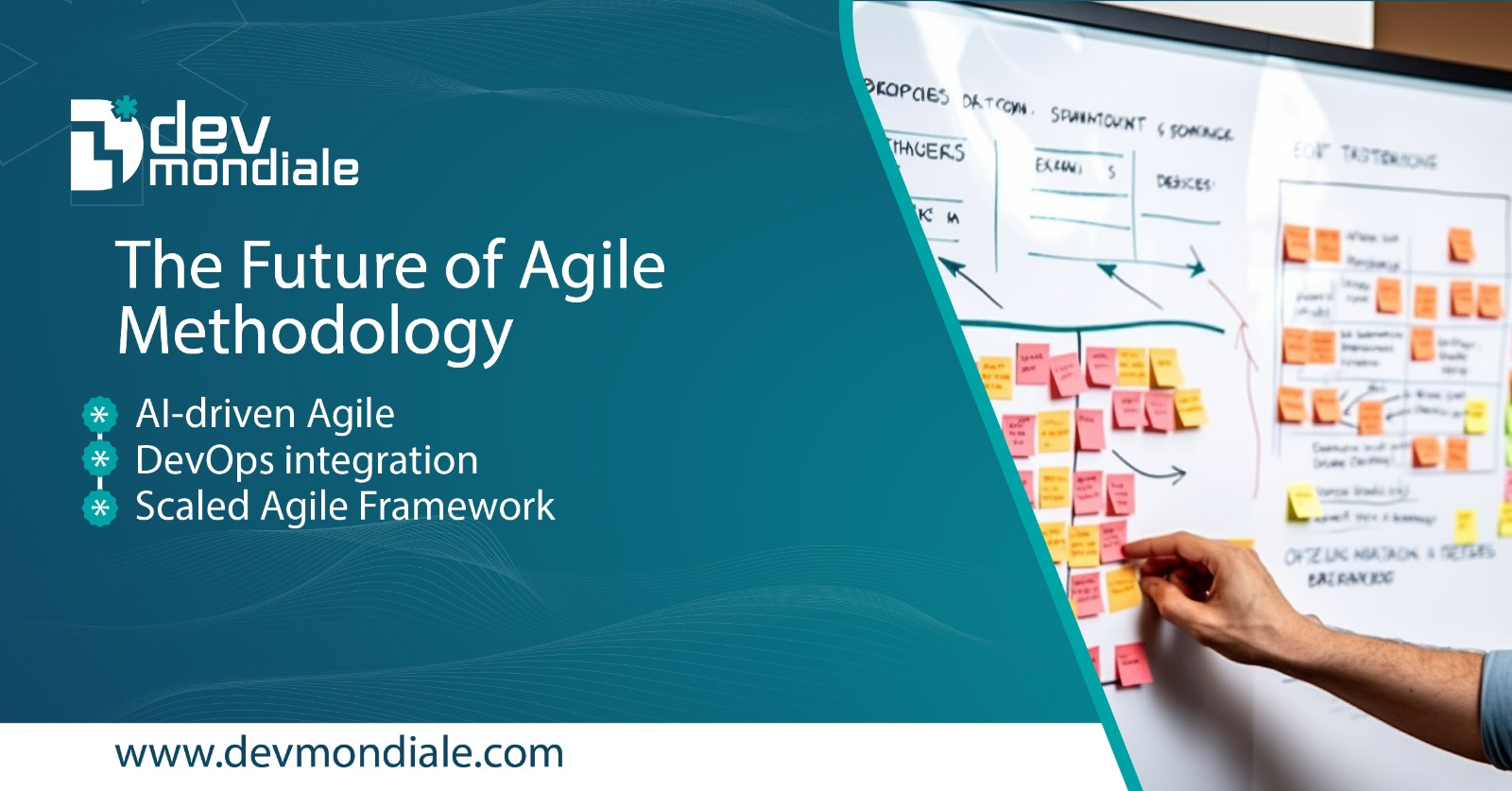
Agile development is still evolving as companies continue to embrace digital transformation. Emerging trends like automated testing tools, remote Agile teams, and AI integration are shaping the future of Agile development.
- AI-driven Agile: Automating sprint management and backlog prioritisation with AI tools.
- DevOps integration: Collaboration is improved through ongoing deployment and monitoring.
- Scaled Agile Framework: Businesses implementing Agile for teams around the world.
However, agile is the cornerstone for producing creative, superior digital products in the modern era, whether it is Python or Laravel development.
Dev Mondiale: Using AI to Create Smarter Software with Agile Methodology
At Dev Mondiale, we investigate The Importance of Artificial Intelligence in Building Smarter Software Solutions, assisting companies in utilising AI to develop creative, effective, and perceptive applications. About Us: Our team of enthusiastic developers, designers, and AI experts is dedicated to providing you with state-of-the-art software solutions. We guarantee better decision-making, improved user experiences, and scalable technology that propels expansion and success by incorporating AI into every phase of development.
Conclusion
Agile methodology is a potent strategy that emphasises adaptability, teamwork, and iterative development to propel successful project execution. Agile guarantees quicker delivery, better quality, and more satisfied customers by segmenting projects into smaller sprints, implementing continuous feedback, and encouraging teamwork. Whether in UI/UX design, software development, or app development, implementing Agile helps companies remain creative and flexible in a rapidly evolving digital environment. Get in touch with Dev Mondiale for professional advice on integrating Agile into your projects.
FAQs
Agile methodology: what is it?
Agile methodology is an iterative approach to software development and project management that prioritises continuous delivery, flexibility, and teamwork. It enables teams to produce excellent results quickly and effectively in response to shifting requirements.
How does Agile operate?
Agile divides projects into sprints, which are brief iterations. Teams can collect feedback, improve features, and make continuous improvements because each sprint produces a working product increment.
What are the main tenets of Agile?
Agile emphasises teamwork, working software, adapting to change, and customer collaboration. Iterative development, continuous testing, quick feedback, and cross-functional collaboration are important techniques.