
Artificial intelligence allows machines to think, learn, and solve problems on their own by mimicking human intelligence. Automation, chatbots, robotics, and sophisticated data analytics are some of the innovations it propels. Businesses can improve decision-making, boost productivity, and offer more individualized user experiences by utilizing AI. AI is changing procedures and results in a variety of sectors, including manufacturing, healthcare, finance, and education. Artificial intelligence continues to be a key component of global innovation and digital transformation as technology develops.
The Impact of Artificial Intelligence on Modern Software Architecture and Design
Software Development | AI Applications | Software Development Life Cycle
Businesses and organizations are under constant pressure to innovate, adapt, and deliver value more quickly than ever before in the fast-paced digital age we live in today. The potent nexus of artificial intelligence (AI) and software development is propelling this change. This blog explores the definition, operation, and practical applications of artificial intelligence across various industries. We’ll examine how the Software Development Life Cycle (SDLC) and AI work together to maximize creativity and productivity. AI is revolutionizing contemporary development techniques in a variety of fields, including cloud-based solutions, financial systems, e-commerce software development, and digital marketing. We’ll also go over how a progressive software development firm can obtain a competitive edge by utilizing AI-driven development, AI software solutions, and AI development services, using tools.
Artificial intelligence: what is it?
Artificial intelligence (AI) is the capacity of machines or software to carry out operations like learning, decision-making, pattern recognition, and language comprehension that normally call for human intelligence. AI is present in software through intelligent automation, computer vision, deep learning, and machine learning. Data collection and processing, neural network training, and feedback loops for ongoing improvement are the key components that enable artificial intelligence to operate. Artificial Intelligence (AI), when integrated into applications and services, turns automation into intelligence, allowing systems to learn, adapt, and produce more intelligent outcomes.
The Confluence of Software Development and Artificial Intelligence
The Software Development Life Cycle (SDLC)
Gathering requirements, analysis, design, development, testing, deployment, and maintenance are all stages of the Software Development Life Cycle (SDLC). Software that adheres to business objectives, maintains quality, and is long-lasting is guaranteed by this methodical approach.
The SDLC is now more dynamic and effective thanks to the incorporation of artificial intelligence (AI) projects. Through data-driven insights, AI improves requirement analysis; optimizes software design; automates code generation and refactoring; enhances testing with intelligent automation; supports predictive performance monitoring during deployment; and makes self-learning systems possible for continuous maintenance and enhancement.
Agile Software Development with Scrum
Agile approaches are frequently combined with Scrum by contemporary development teams to facilitate short sprints, iterative development, constant feedback, and flexibility. These frameworks are even more potent when paired with artificial intelligence (AI). Through task prioritization, cost estimation, and feature value prediction, AI-driven analytics can support sprint planning. With wise suggestions, it can also improve backlog refinement. Leading software development firms now incorporate AI into agile workflows, which improves the process’s efficiency, data-drivenness, and adaptability.
Artificial Intelligence (AI)-Powered Development and the Contemporary Software Firm
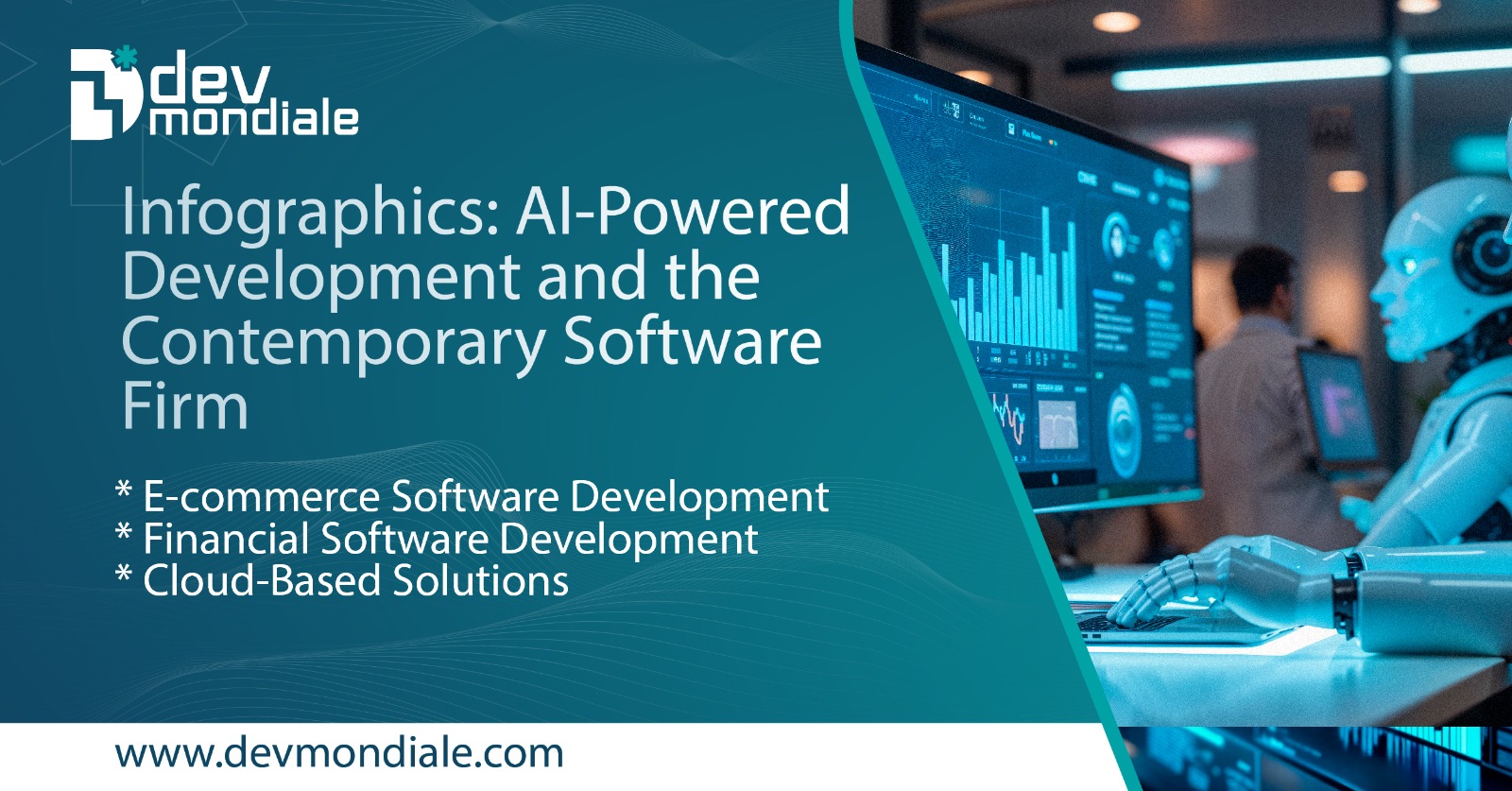
The AI software development and AI development services companies of today do much more than just write code; they create intelligent systems that learn, adapt, and keep adding value.
- AI-powered recommendation engines improve personalization and increase conversions in e-commerce software development.
- Intelligent algorithms in financial software increase decision-making accuracy, predict risks, and identify fraud.
- AI optimizes costs, scales infrastructure, and dynamically manages performance in cloud-based solutions.
In the end, AI is a real game-changer, altering not just the software but also the way it is created, implemented, and enhanced over time.
Artificial Intelligence (AI) Applications and Their Uses in Software Solutions
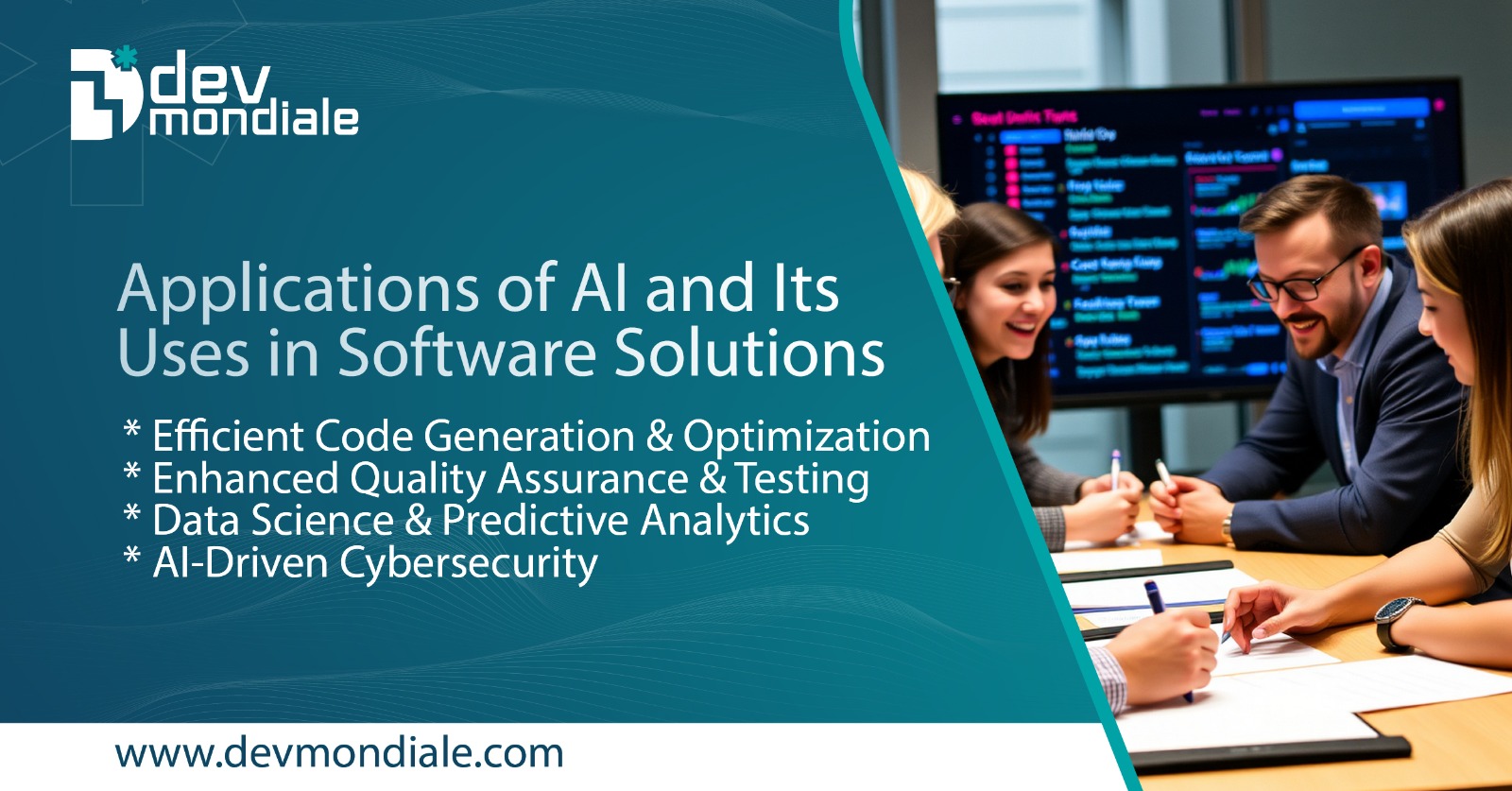
Because of its adaptability, artificial intelligence (AI) is a crucial element in many facets of contemporary software development. Some significant uses of AI in software solutions are listed below.
Enhancing Efficiency in Code Generation, Optimization, and Development
These days, AI-driven tools are essential for automating coding tasks like code refactoring, boilerplate code generation, and autocompletion. To find and suggest the most effective coding patterns, AI algorithms examine enormous code repositories, according to industry insights. These clever tools are used by top businesses like Techimply, EWA Direct, and Nivida Software to reduce repetitive tasks and accelerate development cycles. Developers can now concentrate on strategic problem-solving and produce software that is intentionally smarter, cleaner, and more efficient.
Improved Quality Assurance & Software Testing
Every software project must maintain quality, and artificial intelligence (AI) is revolutionizing the way that testing and quality assurance are carried out. Automated test cases, error-prone code segment detection, failure prediction, and real-time code quality monitoring are all possible with AI-powered tools. These capabilities are used by businesses such as Nvidia Software to reduce defects, improve reliability, and speed up release cycles, resulting in a more reliable and effective product.
Data Science and Predictive Analytics
Software programs can examine both historical and current data to find trends and improve decision-making by combining data science and artificial intelligence. AI algorithms are capable of estimating project timelines, evaluating risks, and optimizing resource utilization in software development.
Artificial Intelligence(AI) and Cybersecurity
The combination of cybersecurity and artificial intelligence (AI) has become essential in a time of increasing cyberthreats. AI-powered systems have unparalleled speed and accuracy in detecting anomalies, identifying vulnerabilities, and responding to breaches. Organizations can improve protection, guarantee compliance, and sustain real-time resilience against cyberattacks by incorporating AI-driven security measures into software development.
Intelligent Apps: Customization & User Interface
By making apps more intelligent and user-friendly, artificial intelligence is revolutionizing user engagement. AI makes personalization possible, adjusts to user preferences, and anticipates each person’s needs through sophisticated algorithms and natural language processing. AI improves the user experience in a variety of ways, from recommendation engines and adaptive interfaces to intelligent chatbots and virtual assistants.
Specialized Domains: Cloud Software, Finance, and eCommerce
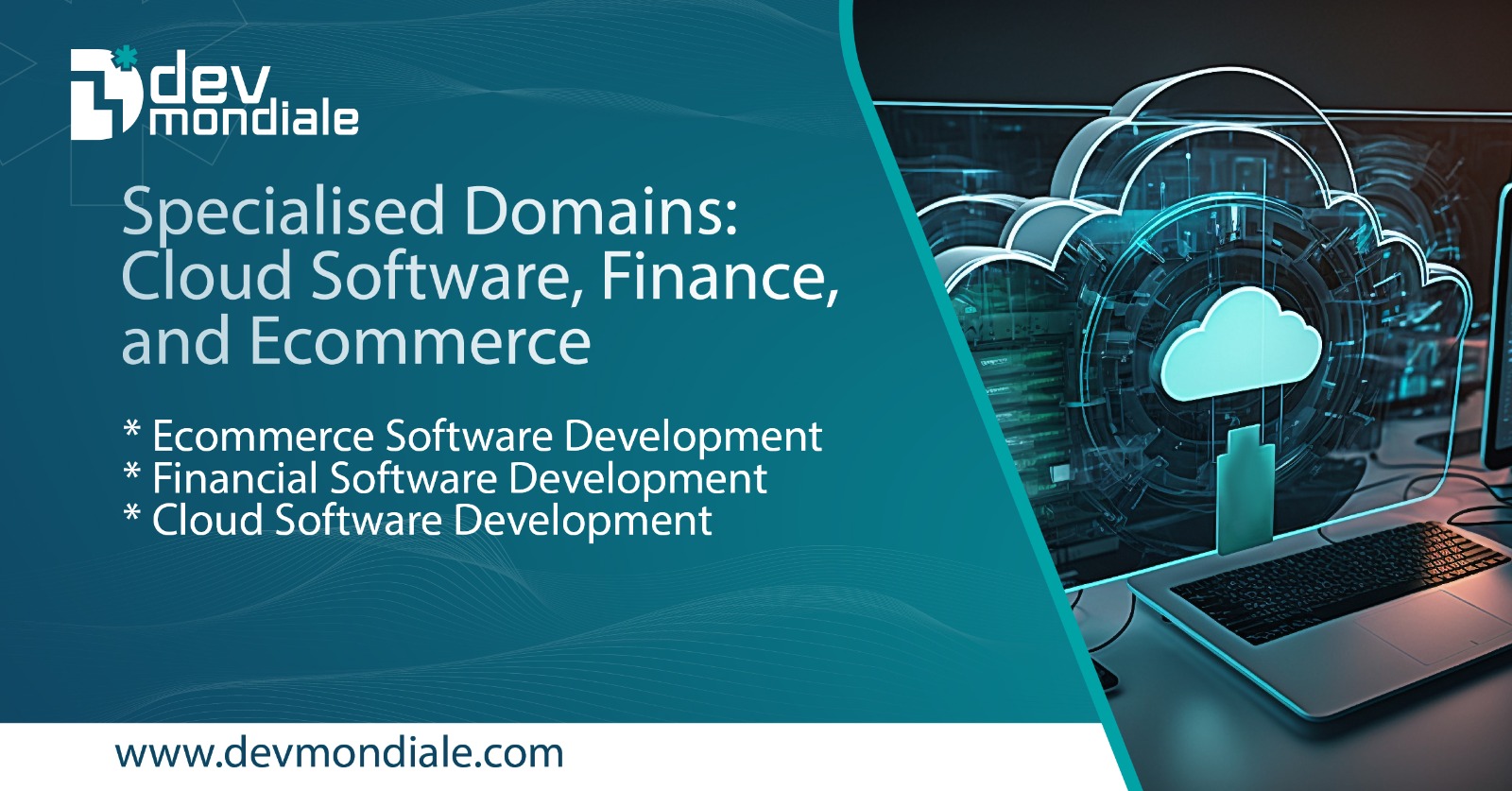
- eCommerce Software Development: AI powers automated customer support, fraud detection, inventory forecasting, dynamic pricing, and personalized product recommendations.
- Financial Software Development: To increase accuracy and security, AI helps with credit scoring, algorithmic trading, risk modelling, compliance monitoring, and intelligent auditing.
- Cloud Software Development: AI makes it possible for cloud environments to scale automatically, optimize workloads, predict costs, and monitor security and performance in real time, all of which contribute to overall efficiency and dependability.
The Significance of Artificial Intelligence (AI) in Developing Intelligent Software
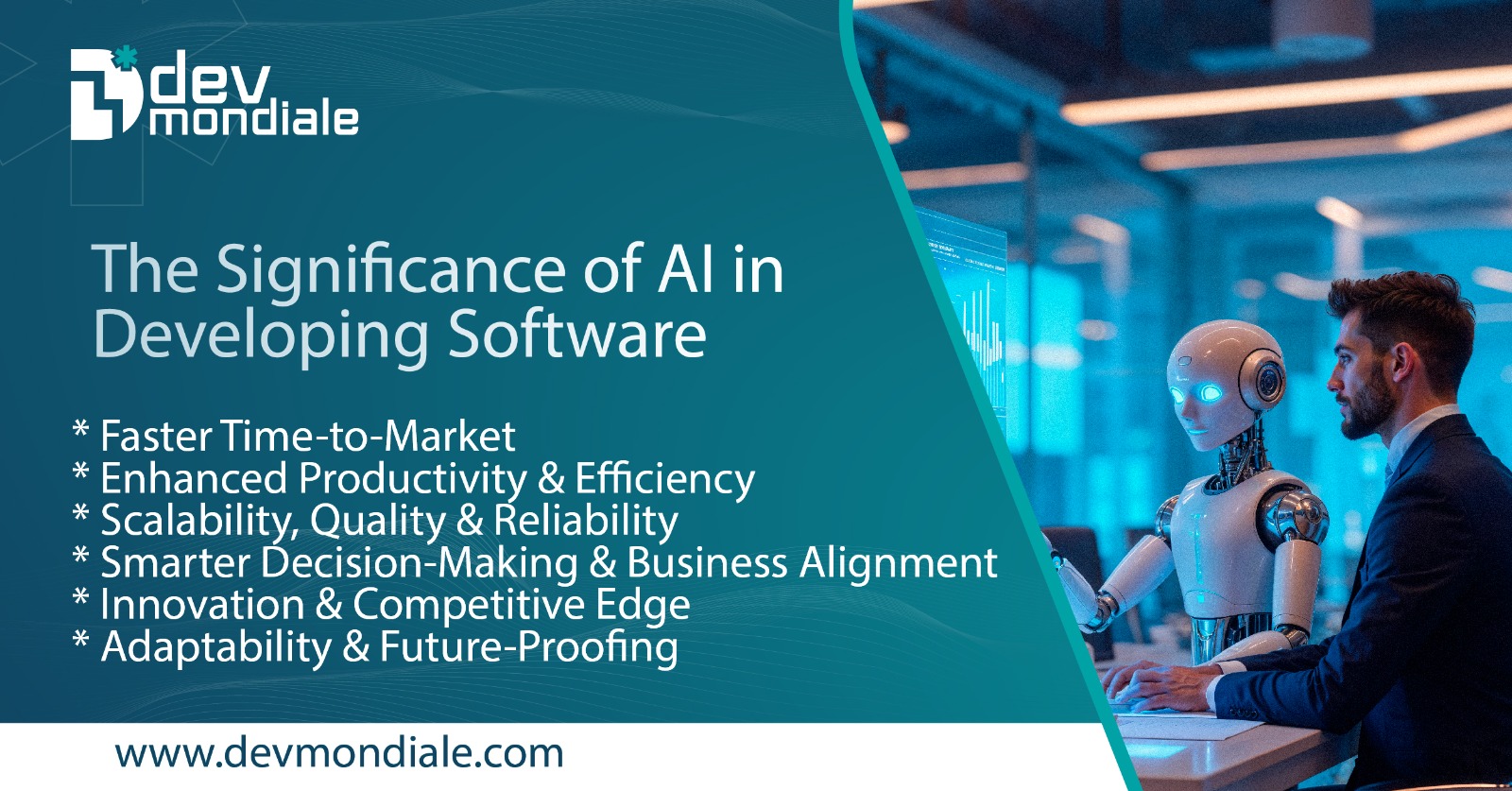
Time-to-Market, Productivity, and Efficiency
Increasing speed and efficiency is one of the main benefits of incorporating artificial intelligence (AI) into software development. AI tools help teams minimize manual effort, streamline workflows, and accelerate delivery timelines. Businesses that use AI to shorten development cycles, such as Intellisourcetech.net and Litslink, guarantee a quicker time to market, which is essential in the current competitive environment.
Scalability, Quality, and Reliability
Software becomes more scalable, stable, and maintainable when intelligence is incorporated into it. Predictive maintenance, code optimization, AI-driven testing, and bug prediction improve performance and dependability in dynamic environments. These capabilities are used by companies like Applied Optics to guarantee long-term scalability and consistent quality.
Improved Decision-Making & Business Coherence
AI-enabled development aligns software with more general business goals in addition to meeting functional needs. Teams can enhance project planning, get rid of inefficiencies, and prioritize high-value features by using data analytics and AI-powered insights. Techimply is a prime example of how integrating AI results in more intelligent, business-oriented software.
Competitive Differentiation and Innovation
AI-powered software stands out in markets full of traditional solutions. By adopting AI-driven development, companies can produce personalized, intelligent, and adaptive apps that are always learning and changing, resulting in distinctive user experiences and opening up new revenue streams.
Adaptability and Future-Proofing
Software needs to change in order to remain relevant as technology develops quickly. Long-term adaptability is ensured by integrating artificial intelligence, machine learning, and AI architectures that are ready for the future. AI-enabled systems can continuously improve their performance with continued research and innovation, such as advancements on arXiv, keeping businesses ahead in a rapidly evolving digital landscape.
Important Things to Consider When Using Artificial Intelligence (AI) in Software Development
Establishing Alignment and Business Requirements
Establishing a precise Business Requirements Document (BRD) is essential before starting an AI-powered software development project. Project objectives, scope, functionality, performance metrics, data sources, and integration requirements across industries like marketing, finance, and e-commerce are all described in this document. By defining these components, one can prevent needless complexity or AI for the sake of AI and guarantee that AI solutions directly support business objectives.
Design of Software and Architecture
The key to a successful AI integration is a well-organized software architecture. Design teams need to determine how data will flow, how AI modules fit into the system, and how the database management system (DBMS) facilitates model performance. The AI backend and user experience (UX) layer should also work together harmoniously to guarantee seamless operation and user-friendly interfaces.
Artificial Intelligence Training, Data, and Algorithms
Strong data, efficient algorithms, and ongoing training are necessary for AI-driven software to function well. Model selection, data preparation and cleaning, feature definition, result validation, and the selection of trustworthy performance metrics are all tasks that data scientists and engineers must complete. Without these procedures, systems run the risk of being biased, inefficient, or inaccurate, which could jeopardise the project’s success.
Development and Assurance of Quality
Integrating intelligent modules into core business logic and implementing stringent software testing and quality assurance are necessary when integrating AI into a custom software development company. Reliability is increased, and post-launch problems are decreased by methods like automated testing, AI-based test generation, regression analytics, and continuous performance monitoring.
Deployment and Maintenance of Software
Compared to traditional rollouts, deploying AI-powered applications is more complicated. To handle performance drift and changing data, AI models need constant observation, retraining, and version control. A carefully thought-out feedback loop guarantees consistent accuracy in production settings and permits ongoing model optimisation.
Platforms & Tools for Artificial Intelligence Development
Advanced frameworks and tools like TensorFlow, PyTorch, and Scikit-learn are essential for developing AI software successfully. In order to simplify AI lifecycle management, contemporary teams also use MLOps pipelines, CI/CD workflows for models, and real-time monitoring tools.
Skills & Change Management
AI integration into software projects necessitates organizational change in addition to technological advancement. Teams must gain proficiency in data science, DevOps, and machine learning, backed by ongoing education and user experience training.
The Function of an Innovative Software Development Firm
Success in today’s sophisticated digital environment requires specialized skills and strategic knowledge, regardless of whether you work for or with a software development company. A genuinely forward-thinking partner should provide:
Proficiency in Artificial Intelligence Development Frameworks and Tools
Delivering scalable, intelligent solutions requires expertise with contemporary AI platforms, such as TensorFlow, PyTorch, and Scikit-learn.
All-inclusive Software Development Services
The capacity to offer complete software application development services that smoothly incorporate AI throughout the software development life cycle (SDLC), from gathering requirements to deployment and upkeep.
Artificial Intelligence (AI)-Powered Development Proficiency
A business that specializes in AI-driven development creates software architecture that incorporates intelligence from the start, guaranteeing applications’ flexibility, automation, and ongoing learning.
Excellent Domain Knowledge of the Industry
A deep understanding of key industries—such as e-commerce, finance, marketing, cloud computing, and cybersecurity—enables developers to create AI solutions tailored to specific business challenges.
Advanced Testing & Quality Assurance
A strong QA framework that incorporates AI-powered test automation, defect prediction, and anomaly detection ensures higher reliability and performance.
Dedication to Ongoing Enhancement
AI systems can adapt to changing business requirements and technological breakthroughs through continuous model retraining, monitoring, and optimization.
Conformity to Agile Approaches
Iterative innovation is ensured by integrating AI into agile frameworks like Scrum, where intelligence is developed. And improved during each development cycle rather than being added after the fact.
Organizations can choose a partner who combines disciplined software engineering with AI expertise to
Developing the Future of Custom Software Development with Dev Mondiale
Our specialty at Dev Mondiale is creating high-performing, scalable, and intelligent custom software solutions. As a multinational software development firm, we create custom applications that address pressing issues by fusing technology, strategy, and innovation. About us: Using cutting-edge technologies and AI-driven development, our team of seasoned developers, designers, and strategists works closely with clients to realize their ideas. Dev Mondiale builds on a passion for digital transformation, designing every solution for growth, performance, and dependability from conception to implementation. Your idea becomes the cornerstone of more intelligent, effective software solutions that propel success when you work with Dev Mondiale.
Conclusion
AI is now the mainstay of contemporary software innovation, revolutionizing the way companies create, develop, and distribute technology. Organizations can increase productivity, accuracy, and scalability by incorporating AI into the software development process. It results in solutions that are not only useful but also intelligent and flexible. At Dev Mondiale, we think that intelligence-driven development is the way of the future for software. Our team uses automation, AI, and machine learning to create intelligent software solutions that adapt to your company’s changing needs. Dev Mondiale can help you realize the full potential of AI and custom software development. Get in touch with us right now. Take the next step towards creating intelligent, future-ready software that propels long-term growth and innovation by collaborating with Dev Mondiale.
FAQs
In software development, what does artificial intelligence mean?
In software development, artificial intelligence (AI) refers to the use of machine learning and intelligent algorithms to improve decision-making, increase performance, and automate tasks.
How does AI improve the intelligence of software?
AI improves efficiency and user experience by allowing software to learn from data, adjust to user behaviour, and make automated or predictive decisions.
Why is artificial intelligence crucial for contemporary businesses?
AI-driven software provides data-driven insights and automation to help businesses cut expenses, increase productivity, and maintain their competitiveness.