
By integrating finance, human resources, supply chain, and operations into a single system, ERP software is essential to Saudi Arabia’s business expansion. Workflows are streamlined, manual errors are reduced, and data accuracy is increased, which promotes efficiency and more intelligent decision-making. Real-time analytics, efficient resource use, and increased customer satisfaction benefit Saudi businesses. Scalability, competitiveness, and long-term success in a quickly changing digital economy are supported by the use of ERP software as the country advances towards Vision 2030’s goals for digital transformation.
Why Custom ERP Software Development Is Essential for Business Success in Saudi Arabia
ERP System | Supply Chain Management | Quality Assurance
The need for strong and integrated systems is greater than ever in the rapidly evolving business environment of today. Maintaining competitiveness necessitates a complete dedication to digital marketing for Saudi businesses aiming to fulfil the lofty goals of Saudi Vision 2030. Custom enterprise resource planning (ERP) software, a crucial instrument that synchronises technology with strategic expansion, is at the centre of this change. It is now necessary, not optional, to have a customized ERP system made to satisfy the Kingdom’s particular legal, cultural, and commercial needs. This blog will cover the definition of an ERP system, the role that software development and the software development life cycle (SDLC) play in its creation, and the major benefits that businesses in Saudi Arabia can expect from investing in custom ERP software development.
What Is an ERP System?
A company’s core operations across departments like finance, human resources, supply chain, procurement, and manufacturing are unified by an ERP system, also known as an enterprise resource planning system. Businesses gain real-time visibility, get rid of data fragmentation, and improve overall process efficiency by combining these functions into a single, integrated system. ERP software is essentially a complete solution that facilitates informed, data-driven decision-making, automates workflows, maintains data through a database management system, and guarantees software testing and quality assurance. Whether it is called enterprise resource planning software, ERP system software, or ERP software, the goal is always the same: to provide businesses with a single, cohesive system that promotes efficiency and expansion.
Custom ERP software and the Software Development Life Cycle (SDLC)
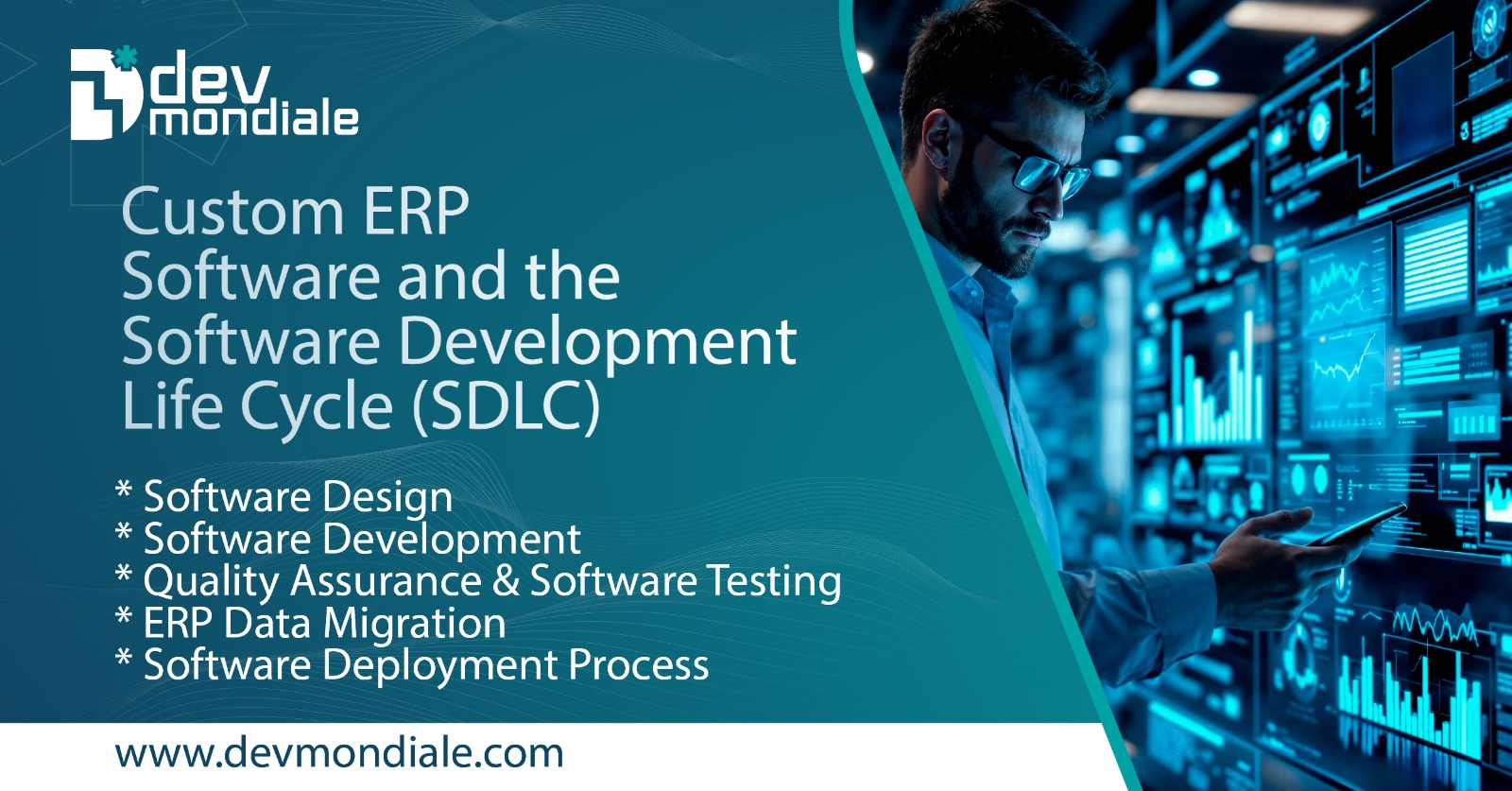
The Software Development Life Cycle (SDLC) is a systematic and structured approach to building a strong ERP system. From planning to deployment, this procedure makes sure that all phases adhere to technical standards and business objectives. The following describes how each crucial stage relates to the creation of custom ERP software:
-
Collecting Requirements and Creating a Business Requirements Document (BRD)
The first step for consultants and business analysts is to compile specific requirements and create a Business Requirements Document (BRD). The ERP project is based on this document, which outlines key business operations, including supply chain management, finance, and human resource management.
-
Software Design
System architects create the ERP platform’s general architecture, which includes user interfaces, database schemas (in a database management system), and user experience flows. Supply chain management, HR, and ERP accounting are among the modules designed for scalability and smooth integration.
-
ERP Software Development
After coding and integrating each module, developers create a unique ERP software solution that is suited to the client’s market conditions and operational requirements.
-
Quality Assurance & ERP Software Testing
To make sure the ERP solution satisfies all technical and business requirements while preserving dependability and data integrity, committed QA teams carry out thorough functional, integration, and performance testing.
-
ERP Software Data Migration
All current data is safely transferred to the new platform if the project calls for replacing legacy systems. The goal of this step is to minimize downtime, maintain accuracy, and be consistent throughout the transition.
The ERP system is either on-premises or in the cloud after passing all tests. A seamless rollout is ensured by thorough user training, change management, and ongoing user experience support.
-
Updating and Maintenance
To adapt to new business requirements, regulatory changes, and technology breakthroughs, the ERP software needs to be updated and maintained regularly after it is deployed. Following the SDLC framework ensures that the customized ERP system for Saudi companies complies with regional laws, is flexible enough to accommodate future business changes, and promotes long-term, sustainable growth.
The Significance of Personalized ERP Software for Saudi Companies
Localization and Compliance
Generic global ERP systems are insufficient in Saudi Arabia due to its stringent regulatory framework, which includes labor laws, localization policies, VAT, and e-invoicing requirements set by the Zakat, Tax, and Customs Authority (ZATCA).
Localized, customized ERP solutions offer:
- Right-to-left layouts, Arabic user interfaces, and support for the Hijri calendar.
- Integrated adherence to Saudi tax and billing laws.
- Integration with government systems, payroll, payment gateways, and local banks.
Saudi companies attain complete compliance, localization, and smooth operational efficiency through the development of custom ERP software.
ERP Accounting Software and Simplified Finance Management
The finance management module, which automates important financial tasks like general ledger, accounts payable and receivable, budgeting, and forecasting, is at the core of every ERP system. Automation of VAT and e-invoicing procedures is equally important in Saudi Arabia, where keeping accurate financial records and producing audit-ready reports are essential. A custom ERP solution like Sowaan ERP fully optimizes its finance module to meet regional accounting standards, legal requirements, and the specific financial workflows of Saudi companies.
Enhanced Inventory Management and Supply Chain Efficiency
For Saudi Arabia’s rapidly expanding manufacturing, retail, and logistics sectors, effective supply chain management and inventory optimization are essential. A custom ERP system enables real-time inventory tracking, automates procurement, and reduces waste while streamlining processes from start to finish. By combining demand forecasting, warehouse management, and supplier performance monitoring, solutions such as Axolon ERP increase productivity and provide Saudi companies with more control, better accuracy, and a competitive advantage in a growing market.
Workforce Efficiency & Human Resource Management
Payroll, employee training, leave requests, and adherence to labor laws are all made easier with an effective Human Resource Management (HRM) module. Saudi companies can easily integrate regional systems like GOSI and Qiwa with custom ERP software to satisfy national employment standards. Furthermore, integrated performance tracking tools boost employee output, automate tedious work, and facilitate data-driven HR choices, all of which contribute to increased operational effectiveness.
Making Decisions and Using Real-Time Information
The capacity of Enterprise Resource Planning (ERP) systems to give leadership access to real-time, integrated data from every department is one of their biggest advantages. Decision-makers can swiftly make well-informed strategic decisions, anticipate market demand, and spot inefficiencies with the help of user-friendly dashboards and sophisticated analytics. A custom ERP solution guarantees data accuracy, consistency, and actionable insights for more intelligent business growth. It is designed with a strong database management system and strong quality assurance.
Flexibility and Scalability
Scalability becomes crucial as Saudi companies strive for expansion and diversification. Adding new modules, users, or entire business units without interfering with current operations is made possible by custom ERP software development. Levon Techno’s solutions enable businesses to swiftly adjust to shifting market demands thanks to their adaptable architecture and integration capabilities, guaranteeing long-term business success and sustainable growth.
Efficiency & Competitive Advantage
Lower expenses and increased productivity are directly correlated with the reduction of operational inefficiencies. By centralizing business processes, reducing errors, and getting rid of redundant data entry, an advanced ERP system optimizes workflows. This operational effectiveness gives Saudi businesses a significant competitive advantage, enabling them to increase profitability and react to market demands more quickly.
ERP Software Testing, Supply Chain Management, and Quality Assurance
Developers must prioritize software testing and quality assurance (QA) when creating a dependable custom ERP system. Every module needs to undergo extensive testing for accuracy, performance, and real-time data integrity, particularly those that oversee supply chain operations. Ignoring these steps can lead to expensive disruptions. Developers prioritize thorough QA and testing in custom ERP development to ensure reliable functionality, seamless deployment, and steady business performance.
Selecting the Best ERP Software for Saudi Companies
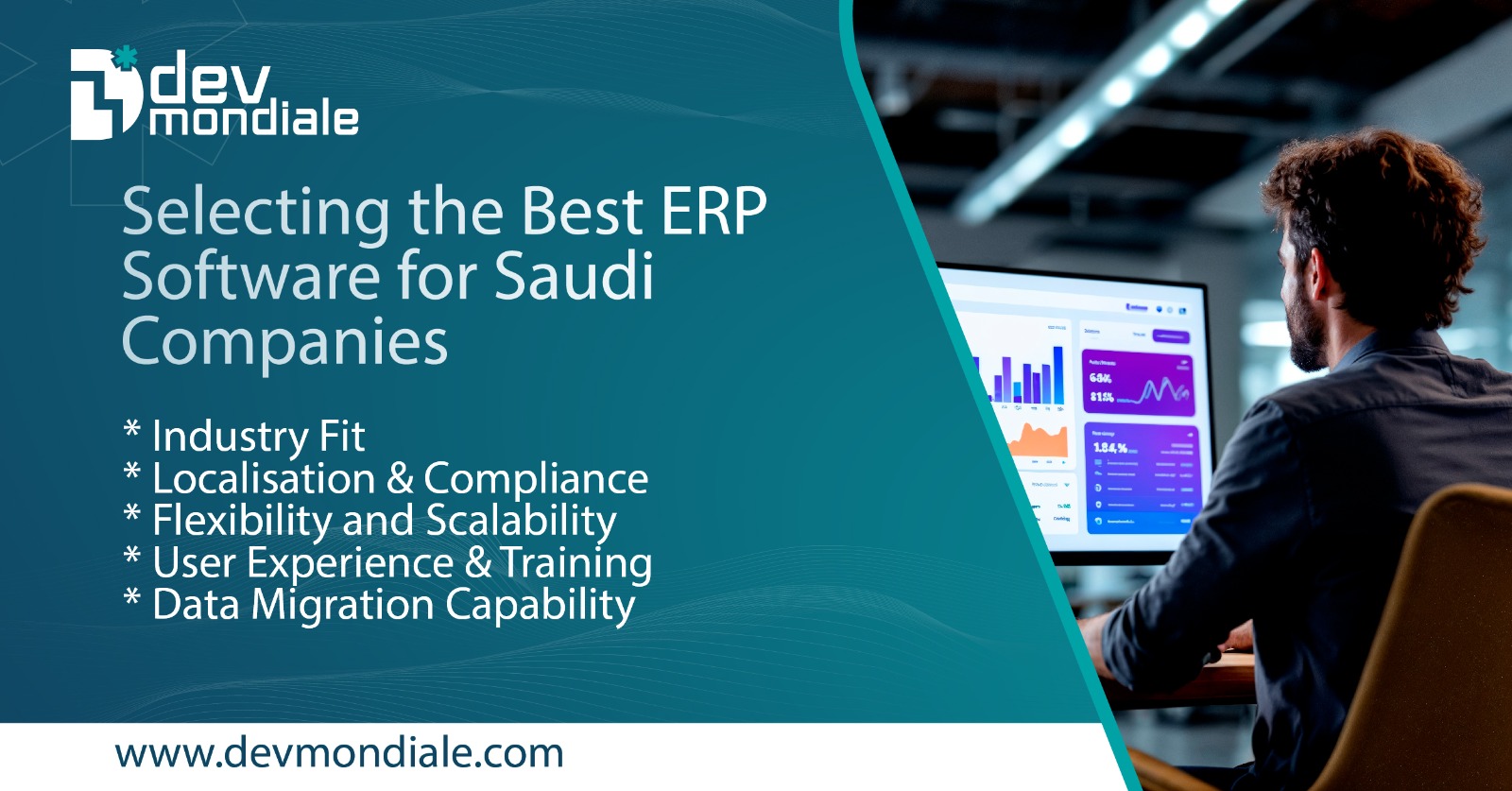
A company’s long-term success can be influenced by the strategic choice. It makes when choosing an ERP system or investing in a custom software development company. It is crucial for Saudi companies to assess the following important factors:
-
Industry Fit
Whether you work in manufacturing, retail, healthcare, or logistics, make sure the ERP solution meets the particular requirements of your sector.
-
Localization & Compliance
The system needs to abide by Saudi laws, such as Qiwa, GOSI, ZATCA, and VAT.
-
Flexibility and Scalability
Select software that can expand with your company by adding more users, branches, or modules.
-
User Experience & Training
A well-thought-out user interface facilitates seamless adoption when paired with thorough training and continuing assistance.
-
Data Migration Capability
The ERP should make it easy to integrate and move data from older systems.
Procedure for Implementing Custom ERP Software Development
A well-organized software development process is essential for a custom ERP rollout to be successful. A summary of the main phases involved is provided below:
-
Planning and Discovery
Stakeholders define the project’s scope, assess existing processes, identify obstacles, and create a Business Requirements Document (BRD).
Developers create detailed module designs (finance, human resources, supply chain management) along with database structures, UI/UX prototypes, and system architecture.
-
Development
Modules are created by developers, who also integrate them with the database management system and automate supply chain, finance, and human resources tasks.
-
Software Testing & Quality Assurance
Verify stability, functionality, and dependability through unit, integration, and user acceptance testing.
-
ERP Software Data Migration
Teams clean, convert, and import legacy data into the new system to ensure accuracy and consistency.
Industry-Specific ERP Software Applications in Saudi Arabia
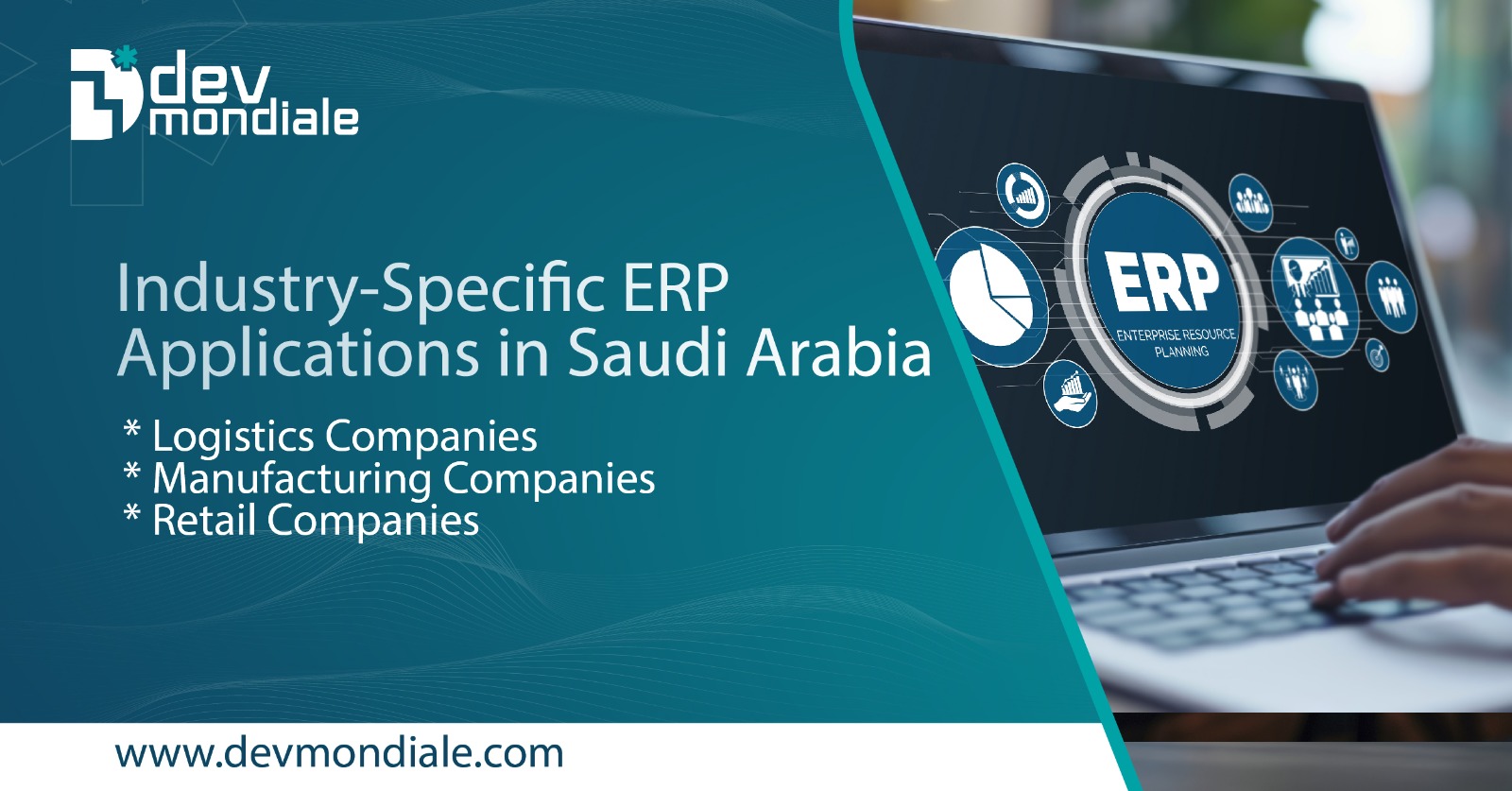
A variety of industries in Saudi Arabia use custom ERP systems to streamline operations and ensure compliance with regional standards.
-
Logistics Companies
Top logistics companies use Decipher Zone’s custom ERP solutions with real-time GPS tracking, warehouse management, and customs compliance features. These systems guarantee regulatory alignment, improve visibility, and expedite transportation workflows.
-
Manufacturing Companies
Sowaan ERP Manufacturers use ERP platforms to handle quality control, production scheduling, and supply chain complexity. By encouraging operational excellence and industrial diversification, these solutions help achieve the objectives of Saudi Vision 2030.
-
Retail Companies
To integrate inventory, sales, procurement, and finance across physical stores and e-commerce channels, Axolon Retailers use ERP software. This integration reduces overstock, enhances cash flow, and improves the overall customer experience.
Mitigation Strategies
-
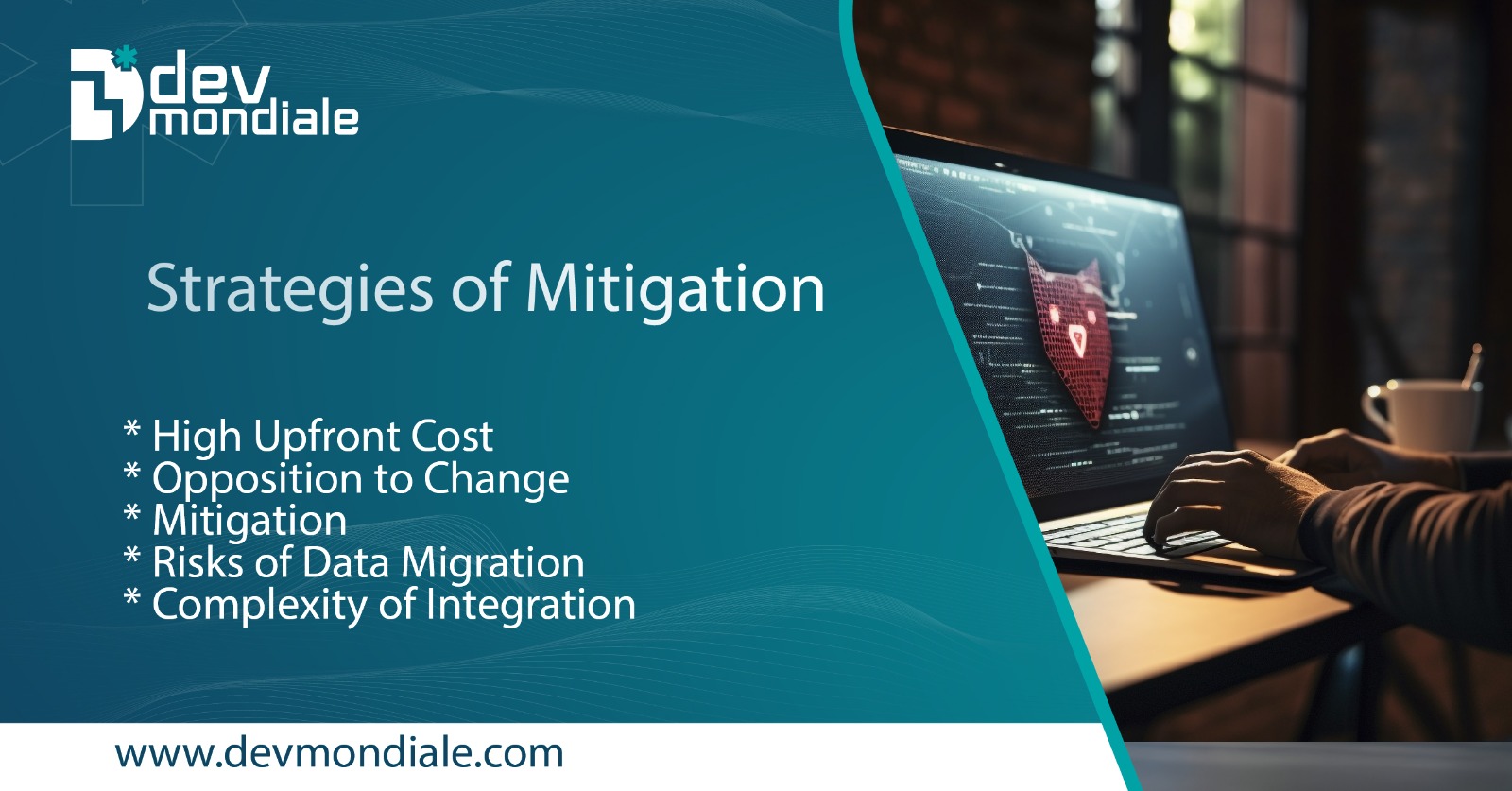
High Upfront Cost
-
Opposition to Change
Workers may be reluctant to embrace new procedures or technological advancements.
-
Mitigation
Put in place efficient change management techniques and offer thorough user experience training.
-
Risks of Data Migration
Include the possibility of inconsistent or lacking legacy data.
-
Complexity of Integration
The ERP needs to interface with current systems, such as POS, CRM, and e-commerce platforms, without any problems.
Dev Mondiale: Driving Saudi Arabia’s Digital Future with Custom ERP Software Innovation
We examine Transformation at Dev Mondiale, illustrating how technology propels Saudi Arabia’s transition to a knowledge-based, diversified economy. Dev Mondiale is a progressive software development company. We specialize in creating enterprise platforms, web development, and customized ERP systems that enhance productivity. About us: To assist Saudi companies in streamlining operations, embracing digital transformation, and achieving sustainable growth in line with Vision 2030 objectives, we bring together local knowledge and global experience. Our dedication to quality allows us to transform concepts into powerful digital realities.
Conclusion
ERP software is now a need for long-term company growth in the rapidly changing Saudi market. Businesses can view and manage their performance in real-time by integrating finance, human resources, supply chain, and operations into a single, intelligent system. Custom ERP solutions made to meet Saudi Arabia’s particular business and regulatory requirements are our area of expertise at Dev Mondiale. For more information or to discuss your project, contact us right now. Our professionals are available to help you at every step of your digital transformation process. To realise the full potential of your company, embrace ERP solutions.
FAQs
Can Saudi Arabia's small and medium-sized businesses (SMEs) benefit from ERP software?
Of course. Because cloud-based ERP solutions are scalable and reasonably priced, SMEs can effectively manage resources, streamline operations, and compete with larger companies.
ERP software: what is it?
Finance, human resources, supply chain, and sales are just a few of the essential business operations that ERP (Enterprise Resource Planning) software unifies into a single system.
In what ways does ERP help Saudi Vision 2030?
ERP systems support innovation, efficiency, and digital transformation—all of which are important objectives of Saudi Vision 2030's economic diversification plan.